
Designing a 130kW PV-Storage-Diesel Hybrid Microgrid
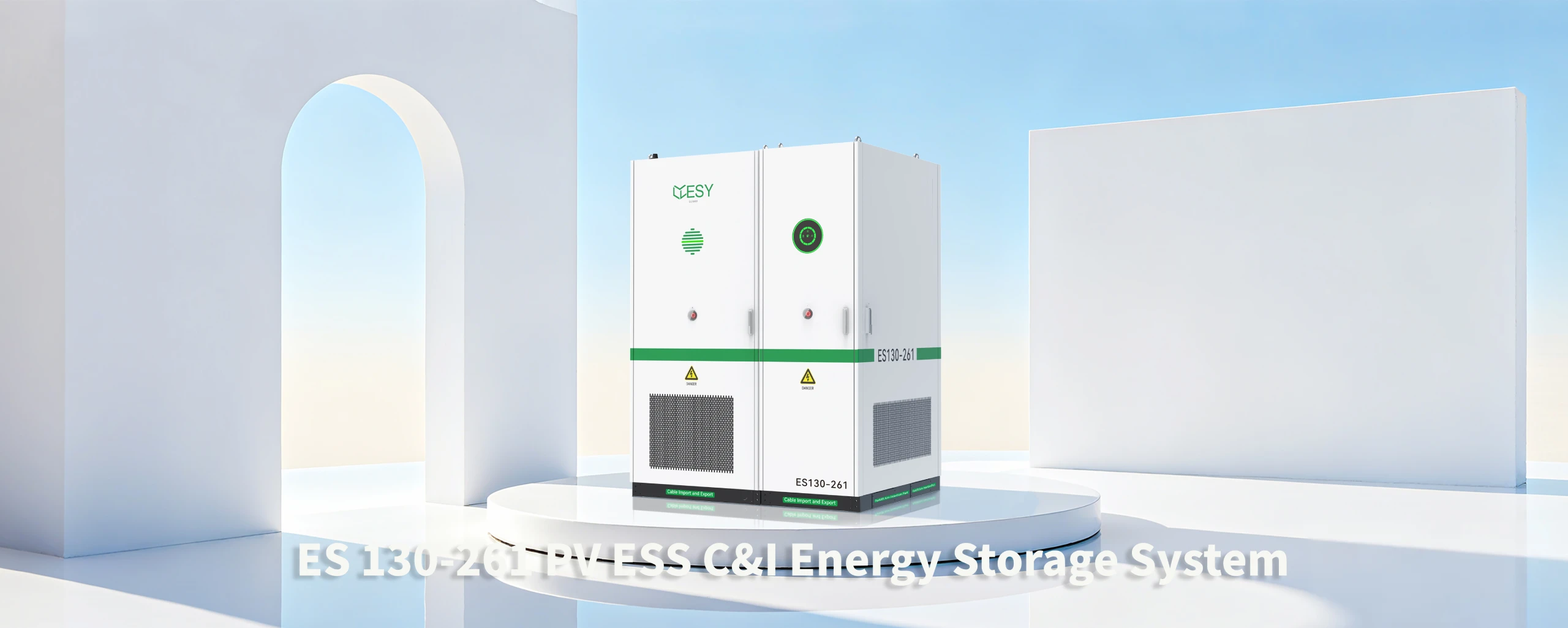
A 130kW PV-storage-diesel hybrid microgrid combines a 130kW photovoltaic array, battery energy storage, and diesel backup generation to provide stable electricity for off-grid and weak-grid applications. Systems such as ESYsunhome ES130-261 integrate renewable generation, 261kWh-class storage capacity, and intelligent energy management to reduce diesel fuel consumption, improve renewable utilization, and maintain reliable power supply under changing weather and load conditions.
Hybrid microgrids have become widely used in remote commercial facilities, industrial sites, agricultural operations, and island communities where grid expansion is expensive or unavailable. A typical 130kW PV-storage-diesel system combines solar modules, battery storage, power conversion equipment, and diesel generators through an energy management system (EMS). The PV system provides daytime electricity, the battery balances short-term differences between generation and demand, and the diesel generator supplies backup power during extended periods of low solar output.
A well-designed hybrid system can reduce diesel generator operating time by 30%-70% compared with diesel-only power systems, depending on solar resources, battery size, and local electricity demand patterns.
The PV array sizing process considers solar irradiation, installation area, module efficiency, and expected annual energy production. For a 130kW photovoltaic installation, modern commercial PV modules with efficiencies between 20% and 23% are commonly selected. Assuming an average capacity factor of 15%-22%, the annual solar electricity production can reach approximately 170MWh-250MWh depending on geographic location.
The PV subsystem usually consists of photovoltaic panels, DC combiner boxes, MPPT controllers, and inverters. The inverter converts DC electricity into AC power while maintaining voltage and frequency stability. In systems designed for industrial applications, inverter efficiency is typically above 97%, reducing conversion losses during daily operation.
| Component | Typical specification |
|---|---|
| PV capacity | 130kW |
| Battery storage | 200kWh-300kWh class |
| Inverter efficiency | 97%-98% |
| Battery round-trip efficiency | 85%-95% |
| Diesel backup capacity | Sized according to peak load |
The solar generation profile changes throughout the day, which creates a need for energy storage. Battery storage allows excess solar electricity produced during midday to be stored and used during evening demand periods. Lithium iron phosphate (LFP) batteries are frequently selected because they provide long cycle life, strong thermal stability, and high safety performance.
For a commercial-scale hybrid microgrid, battery capacity is usually selected according to required autonomy time and renewable penetration targets. A 261kWh storage system, such as the ESYsunhome ES130-261, can provide several hours of energy balancing depending on the connected load profile.
A 261kWh battery operating with an 80% usable depth of discharge can provide about 209kWh of practical energy availability, allowing a 50kW average load to operate for approximately 4 hours without additional generation.
Battery management systems monitor voltage, temperature, current, and state of charge (SOC). Maintaining SOC within a suitable range, often between 20% and 90%, helps extend battery service life. Many commercial lithium battery systems are designed for more than 6,000 cycles, which corresponds to more than 10 years of operation under appropriate conditions.
The diesel generator remains an important component because renewable resources cannot always meet electricity demand. Weather conditions, seasonal solar changes, and unexpected load increases may create periods when PV output and battery capacity are insufficient. In a hybrid configuration, the diesel generator does not operate continuously but starts when specific control conditions are reached.
A typical EMS follows several operating conditions:
-
When solar production exceeds demand, surplus electricity charges the battery.
-
When solar output decreases, the battery supplies additional power.
-
When battery SOC reaches the lower operating limit, the diesel generator starts automatically.
-
When renewable generation recovers, diesel operation is reduced or stopped.
This control approach improves fuel efficiency because diesel generators generally operate most efficiently at higher loading levels. Running a generator continuously at low load can increase fuel consumption and maintenance requirements. Hybrid operation allows generators to work fewer hours and closer to their rated operating range.
In remote power systems, combining PV and battery storage with diesel generation can reduce annual diesel consumption by approximately 20%-60%, depending on renewable availability and system configuration.
System design also requires consideration of load characteristics. Commercial and industrial facilities often have daytime electricity demand that matches solar generation, while residential or community applications may have higher evening consumption. Load analysis normally uses hourly demand data collected over 12 months or longer to determine generation and storage requirements.
A typical design evaluation includes:
| Evaluation parameter | Purpose |
|---|---|
| Renewable penetration | Measures the percentage of electricity supplied by PV |
| Fuel consumption | Evaluates diesel reduction |
| Battery cycling | Estimates storage aging |
| Power reliability | Checks supply continuity |
| Operating cost | Compares lifecycle expenses |
The reliability of a hybrid microgrid depends on proper coordination between generation sources. Simulation tools such as HOMER Pro, MATLAB/Simulink, and DIgSILENT PowerFactory are commonly used to evaluate system performance before installation. These models analyze hourly solar data, load profiles, battery behavior, and generator operation over periods such as 20-25 years.
Economic evaluation normally includes initial investment, replacement costs, fuel expenses, and maintenance costs. Although PV modules and batteries require higher upfront investment than diesel generators, operating expenses are reduced because solar energy does not require fuel. In locations with high diesel prices, the payback period of hybrid systems can often be reduced to 5-10 years.
Environmental performance is another important factor. Diesel generators produce carbon dioxide emissions directly related to fuel consumption. Replacing part of diesel generation with solar power reduces annual emissions. For example, avoiding 100,000 liters of diesel consumption can prevent approximately 270 metric tons of CO₂ emissions, based on an emission factor of around 2.7kg CO₂ per liter of diesel.
A hybrid microgrid designed with a high renewable contribution can achieve 40%-80% lower diesel-related emissions compared with conventional diesel-only electricity systems.
The installation environment also affects system design. Remote industrial locations may require containerized energy storage, weather-resistant equipment, and simplified maintenance procedures. Battery systems must consider ambient temperature, humidity, dust protection, and fire safety requirements. Commercial systems are often designed according to international standards such as IEC 62619 for industrial lithium batteries and IEC 62477 for power conversion equipment.
The future development of PV-storage-diesel hybrid systems focuses on improving energy management through forecasting and automation. Solar forecasting models using weather data can improve battery scheduling, while machine learning methods can optimize generator operation and reduce unnecessary fuel use. By 2030, distributed energy systems are expected to increasingly combine renewable generation, storage, and digital control platforms to support reliable electricity supply in areas with limited grid infrastructure.
A 130kW PV-storage-diesel hybrid microgrid provides a practical solution for reducing diesel dependence while maintaining stable electricity availability. Through coordinated operation of photovoltaic generation, battery storage, and backup generation, the system can achieve higher renewable utilization, lower fuel consumption, and improved long-term operating performance across commercial and industrial applications.
Planning a custom home, addition, or major renovation?
Get a free 12-phase roadmap tailored to your project — no obligation.